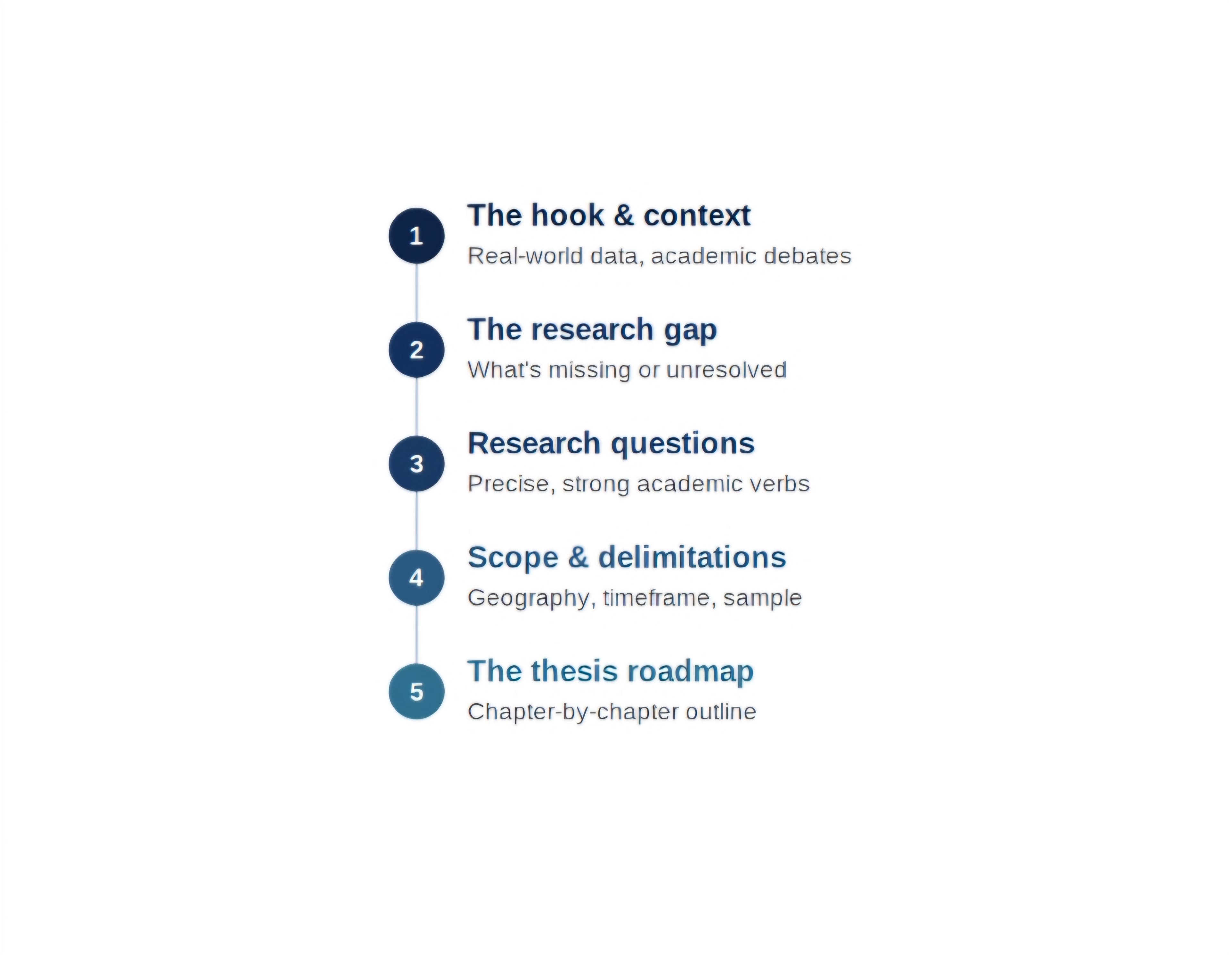
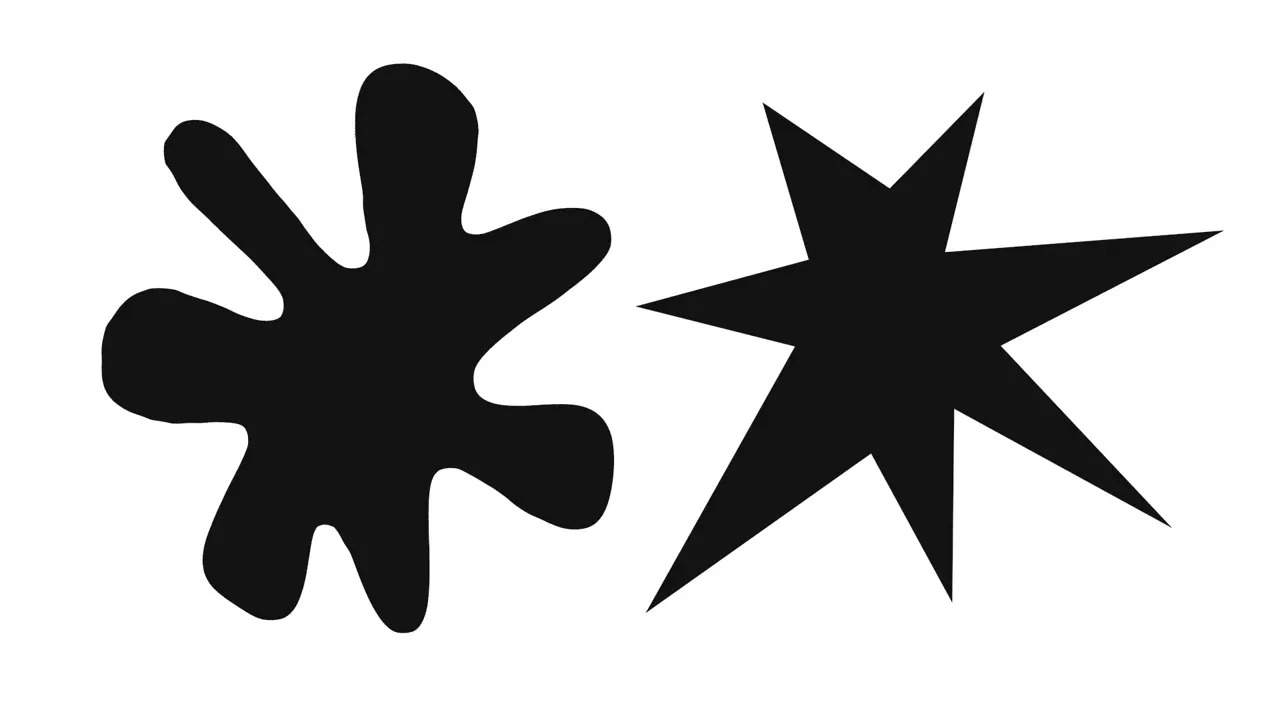
Imagine standing in front of two abstract figures. One is a smooth, flowing shape with wide, arching contours, looking almost like an inkblot or a cloud. The other is a jagged, starburst-like polygon made entirely of sharp angles and pointed edges.
Now, imagine I tell you that one of these shapes is named "Bouba" and the other is named "Kiki."
Without overthinking it, which one is which?
If you instantly decided that the seamless, wave-like shape is Bouba and the sharp, spiky one is Kiki, you are in very good company. In study after study across the globe, over 95% of people make the exact same choice.
It doesn’t matter whether the participants are native English speakers, German academics, Tamil speakers in southern India, or even young children who haven't yet learned to read. This universal mapping is known in cognitive science as the Bouba/Kiki Effect—and it radically challenges one of the most fundamental assumptions in linguistics: the idea that language is purely arbitrary.
The Origin Story: From Baluba/Takete to Modern Neuroscience
For centuries, mainstream linguistics operated on the principle established by Ferdinand de Saussure: the connection between the sound of a word and its meaning is completely random. A dog isn't inherently "dog-like" in sound; we just agreed on the label.
However, in 1929, Gestalt psychologist Wolfgang Köhler noticed a flaw in this theory. Conducting an experiment on the island of Tenerife using Spanish speakers, he presented two shapes and asked participants to match them with two nonsense words: Baluba and Takete. The vast majority assigned Baluba to the soft shape and Takete to the sharp one.
The phenomenon gained widespread attention in 2001 when neuroscientists Vilayanur Ramachandran and Edward Hubbard tested the non-words Bouba and Kiki on North American undergraduates and Tamil speakers in India. The results were stunningly consistent: 95% to 98% of people selected the flowing shape as Bouba and the jagged shape as Kiki.
Ramachandran and Hubbard argued that this wasn't just a quirk of culture or alphabet—it was a glimpse into the physical architecture of the human brain.
What Is Actually Happening in Your Brain?
To understand why your brain connects a sound to a visual shape, you have to look at how motor control, hearing, and vision overlap in the human cortex:
Cross-modal synesthesia: Your brain naturally translates sensory input from one modality (hearing) into another (vision). When you hear the word "Kiki," your auditory cortex registers sudden, harsh frequency shifts. Your visual cortex recognizes that these sharp sound waves match the geometric properties of pointed angles.
Neuromotor mapping: Look at how both words feel when you speak them. Saying "Kiki" relies on a sharp, abrupt sound that naturally feels angular. Saying "Bouba," on the other hand, relies on a smooth, flowing sound that feels instantly rounded. Without even thinking, we map those vocal impressions directly onto what we see.
The prefrontal cortex & evolutionary roots: Some evolutionary scientists believe this cross-modal mapping is the very foundation upon which human language evolved. Before we had complex grammar, early humans used sound symbolic gestures—mapping physical sensations, threats, and visual objects directly to vocal mimicry.
From Sci-Fi Movies to Global Marketing: The Effect in Action
While the Bouba/Kiki effect began as a laboratory experiment, it secretly drives multi-billion-dollar industries today:
1. Brand Identity & Product Design
Car manufacturers, tech giants, and perfume brands spend millions testing product names to ensure the phonetic weight matches the design:
"Kiki" brands (sharp, fast, high-tech): Ikea, Nike, Acura, Nissan, Twitch, Rolex. These names rely on hard consonants (/k/, /t/, /x/) to signal precision, speed, or edge.
"Bouba" brands (soft, comforting, premium): Lululemon, Volvo, Dove, Google, Hulu, Nutella. These names use soft vowels and voiced consonants (/m/, /l/, /b/, /v/) to evoke safety, smoothness, and accessibility.
2. Character Creation in Film and Literature
Storytellers use sound symbolism subconsciously to build immediate emotional connections:
The antagonists: Voldemort, Sauron, Cruella, Jafar, Maleficent. The names are packed with sharp, harsh consonants that instantly code the character as dangerous.
The companions: Baloo, Frodo, Dobby, Baymax, Wall-E. Round, soft sounds signal warmth, loyalty, and safety before the character even speaks a line of dialogue.
What Does "Bouba/Kiki" Have to Do With Academic Writing?
You might wonder how a cognitive experiment with abstract shapes relates to writing a master’s thesis, a research proposal, or a journal article.
The answer lies in cognitive load and readability.
Just as we connect shapes to sounds, we also connect rhythm and flow to written text. When a reviewer reads your dissertation, they aren't just scanning data—they are quietly hearing the pace of your sentences in their head.
"Kiki" writing: Overused passive voice, clunky clause structures, repetitive hard transitions, and dense jargon create a "jagged" reading experience. When readers have to stumble through awkward phrasing, even the most brilliant research becomes an exhausting read.
"Bouba" writing: Well-structured arguments, varied sentence lengths, clear active verbs, and smooth transitions create a logical flow. Complex ideas feel intuitive, elegant, and persuasive because there's nothing slowing the reader down.
Is Your Research Getting Lost in the Noise?
When you’ve spent months or years immersed in a specific topic, it becomes nearly impossible to read your own work with an objective ear. You know what you meant to say, so your brain automatically fills in the gaps and glosses over awkward phrasing.
A great academic paper doesn't just present valid data—it presents it with absolute clarity, precision, and readability.
Don’t let "Kiki" phrasing stand between your research and the impact it deserves. Explore our Services to see how we can elevate your work, or head straight to our Quotes page to calculate your exact price and submit your document in under two minutes.